Showing posts with label architecture. Show all posts

Monday, April 13, 2009

2009 Pritzker Prize Winner


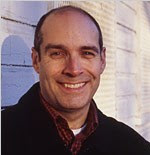
Pritzker Prize Goes to Peter Zumthor


"The Pritzker jury praised Mr. Zumthor's use of materials. 'In Zumthor's skillful hands, like those of the consummate craftsman, materials from cedar shingles to sandblasted glass are used in a way that celebrates their own unique qualities, all in the service of an architecture of permanence,' the citation said, adding, 'In paring down architecture to its barest yet most sumptuous essentials, he has reaffirmed architecture’s indispensable place in a fragile world.'"


Photo: Helene Binet

Monday, July 21, 2008

When History Meets a Resident.


Like old manuscripts historic buildings have special stories to tell. So do the residents of historic buildings. We study and preserve manuscripts, learn the lessons of life and pass the written treasures to new generations. We cherish manuscripts like a jewel of a crown. Do we value architectural structures as much as we do our written heritage?

National Register of Historic Places indicates 84 celebrated buildings in Chicago 83 of which do not have their duplicate anywhere in North America. This means that there are at least 83 stories to tell and pass along.

When nations were being concurred one of the first things to save were books because those would preserve the history of the nation, culture, time and help build the future. In the case of buildings they stand to watch the progress of humanity and remind of the past and values of the previous generations. We try to preserve historic buildings but very often we fail and succumb to tearing those down. But those buildings affect not only the city but individual lives as well.

Linda Hogopian, Global Account Executive of Marriott International, Inc. spends most of her working day in Wrigley Building where her office is now located. “Every time I walk the hallways in this building I truly feel honored since I know history was made here for several companies and of course the one and only Wrigley Company,” says Hagopian.

The Wrigley Building is one of North America’s most famous office buildings. The construction of the building began in 1920s when Michigan Avenue was still called Pine Street. The building was one of the first tenants of what came to be known as “The Magnificent Mile”.

Charles Beersman, chief designer, combined French Renaissance ornaments and an inspiration of Seville Cathedral’s Giralda Tower in Span to give Chicago the luminous white Wrigley Building.

“There is a barbershop on the 3rd floor. Every time I walk by, I smile, I wonder how many important businessmen got there haircut there during the 20's, 30's. I also think of how many heartfelt stories were shared during a haircut especially during the depression,” says Hagopian.

Elizabeth Archer, Regional Leasing and Marketing Manager for Green Village has been living in a historic Fisher Building for the last two years. Archer confesses that living in a building which was once the tallest building in the world she is set back in time. “Building’s terra-cotta carvings of various creatures get me the sense of history,” says Archer. Eagles, dragons and mythical creatures are guarding the façade of the building.

This tall neo-Gothic landmark building in the Chicago Loop Community area was custom-built by paper magnate Lucius Fisher. The original building was completed in 1896 by D. H. Burnham & Company. The building was added to the National Register of Historic Buildings on March 16, 1976.

In 2000 Kenard Corporation restored the exterior terra cotta and wood windows and converted the office space to apartments, while preserving the lobby and hallways.

“I once met an elderly lady in the lobby who used to lease office space back in the 80s who decided to move back this time as a resident once the building was renovated and turned into a residential building.” In how many buildings can this happen?

“I do not see myself living in a modern type construction,” says Archer.

Not all residents of historic buildings enjoy the unique treasures of old historic buildings as much as Hagopian and Archer do.

Wallie Bracket, DePaul University Graduate Student of Journalism gives a different perspective of living in old, historic buildings.

Bracket has been living in East Park Towers since 2005. The building was part of series of hotel apartment buildings in the Hyde Park built between 1918 and 1929. The East Park Tower is a unique U-Shape red brick building with terra cotta trim. William P. Doerr Designed the Georgian style building which is now listed in the National Register of Historic Places in Chicago.

According to Bracket you can sometimes hear mysterious cracks. No, the sounds are not associated with ghosts but rather with poorly preserved foundation and flooring. “The elevators are not working well, you get stuck very often. I cannot wait to move into a new building with the state of the art gym and security system,” says Bracket who is terminating his leasing contract in August of this year.

Cracks and modern day amenities can be handled by the management of the building. Costly? Yes, maybe. But worth preserving the history which affects individual lives just like old manuscripts do.

Friday, July 11, 2008

Q&A: Revel Chicago with Geoffrey Baer


Geoffrey Baer expert of the Windy City, host and producer of well known Hidden Chicago, Foods of Chicago, Chicago by “EL” and many other programs at WTTW11 found time to share his views about our city with the readers of Revel Chicago.

How would you describe Chicago and its architecture?

That is a very broad question!

Chicago has its origins as a boom town. It exploded from a modest frontier trading post into the fast-growing city in the history of the world between 1800 and 1840 as the construction of the Illinois and Michigan Canal brought a flood of land speculators here to the wild interior of the country. Although many modern-day Chicagoans are completely unaware of this history I think the “boom town” mentality informs Chicago’s personality to this day.

It seems to me that Chicagoans generally are more interested in and proud of their architecture than residents of many other cities.

There have been several times in history when Chicago played an important role in the art and science of architecture.

In the late 1800s some of the most important innovations in high-rise (“skyscraper”) and residential architecture were pioneered here, both in technology and design at firms like Adler and Sullivan, Holabird and Roche, Burnham and Root, and of course Frank Lloyd Wright.

In the 1950s and 60s Mies Van Der Rohe and later Skidmore, Owings and Merrill pioneered the stripped-down style that came to be called “Modernism”.

Most Chicagoans are proud of the excellent collection of buildings in our downtown area. And architects generally seem to respect Chicago’s history of fine buildings. Unfortunately the boomtown mentality in our recent real estate market was bad for our built environment. The explosion of condo development on the edges of downtown in recent years has given the city a disappointingly large number of mediocre buildings.

Can you compare Chicago to any other city?

I have heard people say that Toronto has some similarity to Chicago. It’s a waterfront city on the Great Lakes with a dramatic downtown skyline. Cleveland is another example of this.

But with the exception of New York (which is of course much larger) there’s no other American city with anything like the scale of our downtown. L.A. which has a larger population is a sprawl city without a concentrated downtown.

The building boom in some Asian and Middle Eastern cities today in some ways is similar to what happened in Chicago after the Great Fire of 1871. Like Chicago, these cities are trying to assert their greatness with huge urban developments and astonishingly tall buildings that push the envelope of technology. The scale of what’s happening today in places like Shanghai and Dubai dwarfs what Chicago did during its boom a hundred years ago.

You know so much about Chicago, what have you learned/discovered recently that surprised you the most?

I rode a tugboat up the Illinois Waterway from Joliet into the South Loop. I had absolutely no idea there was so much maritime activity still surviving here. Huge barge tows, amazing shipping terminals, a lock almost as big as those on the Panama Canal and a hydroelectric dam built in the early 1900s. I was astonished.

How do you see Chicago (its architecture) in the 21 century? Is there a particular trend you have noticed Chicago architecture is following?

Chicago may have clung a little too tightly to its history of great buildings and so it was slow to embrace international architects and new, avant-garde design.

But recently international architects have been getting lots of commissions here. So we now have (or soon will have) excellent buildings by architects like Rem Koolhaas, Frank Gehry, Santiago Calatrava, Renzo Piano and others.

There have also been some excellent new buildings from locally based architects including Helmut Jahn, Studio Gang and Krueck + Sexton.

In all of these projects architects have embraced technologies that allow them to create forms that would simply have been impossible before the era of computer-aided design. New technologies in the engineering of glass and framing also allow new artistic possibilities.
As everywhere else, the interest in sustainable “green” architecture has firmly taken hold here.

Having explored all the possible and impossible tour routes in Chicago what would you recommend Chicagoans as well as visitors to see in the city?

Take the “L”! Follow the Brown Line and Orange Line all the way to the end. Amazing journeys. The Blue Line out through Pilsen, the Red Line through the North Side and the Green Line through the West and South Sides are also fascinating trips.

The lakefront and river tour boats are also wonderful ways to experience the city.

Friday, June 27, 2008

Did you know? Biggest Green is in Chicago


The Merchandise Mart in Chicago IL is the World's Biggest Green Building.

You probably did know that The Merchandise Mart had its own zip code. From 1963 to 2008 July only the Merchandise Mart and its neighboring Apparel Mart had the 60654 ZIP Code due to its 4.2 million gross square feet occupancy. You have most likely noticed that the 25 stories commercial giant spans two city blocks.

What is probably going to be news for you is that the 78-year-old world's largest commercial building is now the world's biggest Green Building!

This came as a result of several factors:

  • replacing most of the building's 4,000-plus windows and upgrading rusty motors to taking better care of dust mops
  • upgrading a 1980s ice-storage cooling system to serve Mart's cooling needs
  • installation of individual meters to track water, electricity and other utility consumption

Want to know more about your biggest Green neighbour? here you go.

Wednesday, June 25, 2008

Tribune Tower Possibly on Sale


Yet another historical building to be put for sale.

The Chicago Co. is likely to put Neo-Gothic Michigan Avenue home of the Chicago Tribune and Los Angeles Times' downtown Times Mirror Square complex on sale in an attempts to maximize the value of the company's assets.

Tribune Tower may be best known for the many historic stones attached in its limestone exterior. This 40-story building was completed in 1925. It was one of the first Chicago skyscrapers built north of the river.

Phil Rosenthal, Chicago Tribune media columnist, has details in his report .

This news is expected to raise heated debates among Chicagoans taken into consideration the historic value of the building, real estate market situation.

How do you, readers of Revel Chicago, see the situation?
What is your attachment to the building?
What is your first reaction?


Tuesday, June 24, 2008

Monday, June 23, 2008

Historical Buildings in Chicago

Many historical buildings are concentrated on the Michigan Avenue. Among them the landmark Chicago Athletic Association building at 12 S. Michigan. This 11-story building is built in the Venetian Gothic style, which is rare in Chicago. The construction dates back to 1890 and is likened to the Doge's Palace in Venice.

Recently the building has attracted the attention of not only the eyes of revelers of Chicago but specialists. That is to say preservationists and potential developers. The latter want to buy the building and preserve some interior space of the main building and build a 19-story hotel tower Preservationists, however debate to preserve the ornate structures unaltered. You can read more here.

Built in 1899 The Sullivan Center (formerly known as the Carson, Pirie, Scott and Company Building) is a commercial building at 1 South State Street. It was used for retail purposes from 1899 until 2007. At present it is under redevelopment by Joseph Freed & Associates, a real estate developer based in Palatine, IL. It is still unknown what the building will host in the future.

The Santa Fe Building, also known as Railway Exchange Building, is a 17-story office building in the Historic Michigan Boulevard District. This building is identifiable by its logo “Santa Fe” on the roof. It can be seen from the Grant Park and even Lake Michigan. Originally the building was designed as railway exchange. Today one of the tenants of the building is the Chicago Architecture Foundation.

The Chicago Theater located on North State Street in the Loop community area was constructed in 1921 at a cost of US$4 million by architects Cornelius W. Rapp and George L. Rapp. The Chicago Theatre was one of the first theaters in the nation to be built in the classical revival French Baroque style and is the oldest surviving example of this style in Chicago.

The One North LaSalle Building At 530 ft and 48 stories was for some time one of Chicago's tallest building.

Inland Steel Building was an integrated steel company that reduced iron ore to steel. The company was active in 1893-1998 and was headquartered in Chicago. Current Indian metal giant Mittal Steel acquired Inland Steel in 1998.

Chicago’s
Federal Center Building is last but not the least in the top 10 architectural sight in the city. Principal architect Mies van der Rohe designed the building on two main principles: “less is more” and “God is in the details.” The Federal Center consolidated over thirty agencies formerly scattered throughout the city in substandard leased space. This glass-steel design is landed on a one-block site, bounded by Jackson, Clark, Adams, and Dearborn streets.

Historical Buildings in Chicago


According to Kim Clawson, the Vice Chairman of the Chicago Committee on High Rise buildings, there is a widely accepted perception that the skyscrapers are the most American type of architecture. This is explained by the American culture of commerce. No wonder the majority of the top 10 historical buildings are commercial constructions.

Best historical architectural sights start with the Monadnock Building built in 1893. It is one of the tallest masonry load-bearing wall structures in the world. However Philadelphia City Hall holds the world title. Monadnock is a proto-skyscraper in the Loop district of downtown located at 55 E Jackson Blvd. It is across the street from the Federal Center, the Union League Club and the Standard Club.

Marquette Building is next in this short-list of architectural sights in Chicago. The building was designated in 1975 by William Holabird & Martin Roche. It was named after Father Jacques Marquette , the first European settler in Chicago, who explored the Chicago region in 1674. The building was one of the early steel frame skyscrapers of its day, and is considered one of the best examples of the Chicago School of Architecture.

The Reliance Building is the first skyscraper to have large plate glass thus putting a start to a new trend of glass surface skyscrapers of the 20th century. It is located at 20 North State Street. As of 2006 it houses the Hotel Burnham.

The Fisher Building is the oldest 18 story building in Chicago that has not been demolished. It is a 20-story, 275 foot tall neo-Gothic landmark building built in 1986. Today the building houses apartments on floors 3-20 and commercial stores on the 1st and 2nd floors.

Friday, June 20, 2008


In 1942 Victor Lindlahr gave the notion of “You Are What You Eat” nutritional prominence. Sixty-six years later let’s try and alter the phrase and put the emphasis on aesthetic value: You Are Where You Live.

If you happen to live in the City of Chicago you must be an enthusiast of cultural diversity. Chicago’s architecture creates the historic record of the cultural, socio-economic and aesthetic values of this range.

Chicago is a unique cradle of architectural variety. Designers from all the corners of the world granted their signature buildings to this city. Each building helps tell the story of the city in its own distinctive way. Old Greek revival style structures stand in harmony with modern skyscrapers making Chicago’s skyline a distinctive image one can associate only with this Windy City.

Chicago’s architecture can take you to a long journey of lines and shapes, styles and inspirations. Take a moment and enjoy the diversity of Chicago that is reaching higher and higher to the sky here at Revel Chicago.